Promoting gender equality is not only the right thing to do but the smart thing to do - GOES WITHOUT SAYING,,,
Gender equality begins with justice, yet it reaches far beyond it. It is the groundwork upon which resilient societies are built. When every person—regardless of gender—is given equal opportunity to contribute and lead, economies grow stronger, communities become healthier, and societies become more secure.
At its core, gender equality liberates individuals from limiting norms and inherited expectations. It allows people to pursue their ambitions without being confined by stereotypes. In doing so, it cultivates environments where respect is the standard, safety is assumed, and each individual’s voice carries weight.
When diverse experiences and perspectives are welcomed, creativity deepens, and progress accelerates. Advancing gender equality is therefore not only a moral imperative; it is a strategic investment in a more innovative, sustainable, and hopeful future for generations ahead.
DENMARK, FINLAND, ICELAND, NORWAY, and Sweden are countries consistently recognized for their gender equality. The shared gender qualities of the Nordic countries rest on a powerful combination: strong welfare states, cultural egalitarianism, institutional design, and a societal expectation that equality benefits everyone.
The Nordic countries share a distinctive approach to gender equality that has shaped and continues to shape both policy and culture. While each country has its own nuances, several core qualities unite them, for example.
- Gender Equality as a Structural Principle. It is embedded in law, governance, and public policy, a foundational democratic value. Anti-discrimination legislation, equal pay frameworks, and gender mainstreaming in policymaking are standard practice.
- Shared and paid parental leave. A defining feature is the expectation that both women and men participate in paid work and caregiving. This is supported by parental leave for both parents (including non-transferable “father quotas”), publicly funded childcare, and flexible work arrangements.
- High Female Labor Force Participation. Nordic countries consistently rank high in women’s employment rates. Economic independence is viewed as central to gender equality, and welfare systems are designed to support continuous labor market participation.
- Political Representation. Women are strongly represented in parliaments and governments. Several Nordic countries have had female heads of government, and political parties often use voluntary gender quotas to ensure balanced representation.
- Cultural Norm of Egalitarianism. Beyond policy, there is a deeply rooted cultural expectation of equality, modest hierarchy, and shared responsibility. This influences everything from workplace leadership styles to family life.
- Commitment to Gender Equality in Education. Schools actively address gender norms and encourage equal participation in all subjects and activities. There is an ongoing public debate about masculinity, femininity, and inclusion.
- Openness to Expanding Gender Discourse. The Nordic model increasingly incorporates discussions on: LGBTQ+ rights, Non-binary identities, Intersectionality (ethnicity, class, migration, disability). In other words, gender equality is understood as evolving.
- High Global Rankings. Nordic countries consistently top global indices such as the World Economic Forum’s Global Gender Gap Report, reflecting sustained institutional commitment.
Reflection: If you grew up in a Nordic country, do you see gender equality as something natural and self-evident—and how might your perspective shift if you considered that these rights and responsibilities are the result of relatively recent social and political struggles rather than timeless cultural traits?
THE STRUGGLE TOWARDS GENDER EQUALITY
Like many struggles for equality, the first decisive step for women in the Nordic countries was securing the right to vote. Below is an overview of when each country granted women the right to vote.
- Finland: Finland was one of the first countries in the world to grant women full suffrage. Women in Finland gained the right to vote and run for parliament in 1906, making Finland the first European country to grant women full political rights.
- Denmark: Women in Denmark gained the right to vote and run for office in municipal elections in 1908. Full suffrage was granted in 1915.
- Iceland: Women in Iceland gained the right to vote in parliamentary elections in 1915. However, it wasn't until 1980 that Iceland elected its first female president, Vigdís Finnbogadóttir, making her the world's first democratically elected female head of state.
- Norway: Norwegian women won the right to vote in 1913, but it wasn't until 1918 that they were allowed to stand for election to the Norwegian Parliament (Storting).
- Sweden: Women in Sweden gained the right to vote in municipal elections in 1862. Full suffrage was granted in 1919.
Being granted the right to vote paved the way to several reforms:

DID YOU KNOW THAT
The 1920s in the Nordic countries are often characterized as a period that strengthened and expanded women’s financial independence. Laws removed men's guardianship over their wives and allowed women full rights to own property. Unfortunately, women who married found themselves not allowed to work. The belief was that this would push men out of the labour market.
1939 was the year when Sweden became the first country in Europe to prohibit the dismissal of women from their jobs on the grounds of marriage or engagement.
However, a significant obstacle remained. Because spouses’ incomes were combined and taxed as a single household income, the overall tax burden often became so high that it made little economic sense for the wife to remain in paid employment.
Moreover, when both partners worked, additional costs frequently arose — such as childcare and domestic help — further reducing the financial incentive for women to participate in the labor market.
In 1971, Sweden and Denmark introduced individual taxation, changed the problem of joint taxation, and created a stronger financial incentive for married women to join the labour force, effectively ending the housewife era.
1960s-1970s During the 1960s and 1970s, severe labor shortages in Sweden, Denmark, Norway, and Iceland led to the active recruitment of both unmarried and married women into the workforce. In Finland, however, women were already widely engaged in full-time employment, largely as a consequence of the social and economic effects of World War II.
1960-1970s Childcare REFORM
In 1964, Denmark was the first country to legislate for childcare, followed by Finland, Iceland, and Sweden in 1973 and Norway in 1975.
1960s The social movements of the 1960s were driven by demands for justice, equality, and expanded rights—concerns that deeply influenced the development of family policy in the Nordic countries.
Nordic family policy has not merely supported families; it has sought to reshape social behavior. A central objective has been to advance gender equality by strengthening women’s participation in the labor market while simultaneously encouraging greater paternal involvement in childcare.
In essence, these policies have promoted a more equal distribution of household and caregiving responsibilities, marking a deliberate shift away from the traditional model in which such duties rested primarily with women. Challenging entrenched workplace hierarchies, domestic expectations, and conventional notions of masculinity and femininity has been integral to this transformation.
Gender Equality & ICELAND, 2026
Today, Iceland stands alone—surpassing 90% gender equality. Not perfect. Not finished. But further ahead than any other country in the world. And this did not happen by chance OR overnight.
POWER, VISIBLY HELD BY WOMEN
In 2026, leadership in Iceland tells a clear story:
President — woman
Leaders of the three major political parties — women
Mayor of Reykjavík — woman
Rector of the University of Reykjavík — woman
NOPE, This is not symbolic. This is structural.
ONE DECISION CHANGED EVERYTHING
The formation of the Women's movement in Iceland, led by the RED STOCKINGS, helped ignite a movement that did and achieved something radical:
They came together.
Across politics.
Across beliefs.
Across differences.
They chose to ACT as one voice.
THE DATE 24 OCTOBER 1975
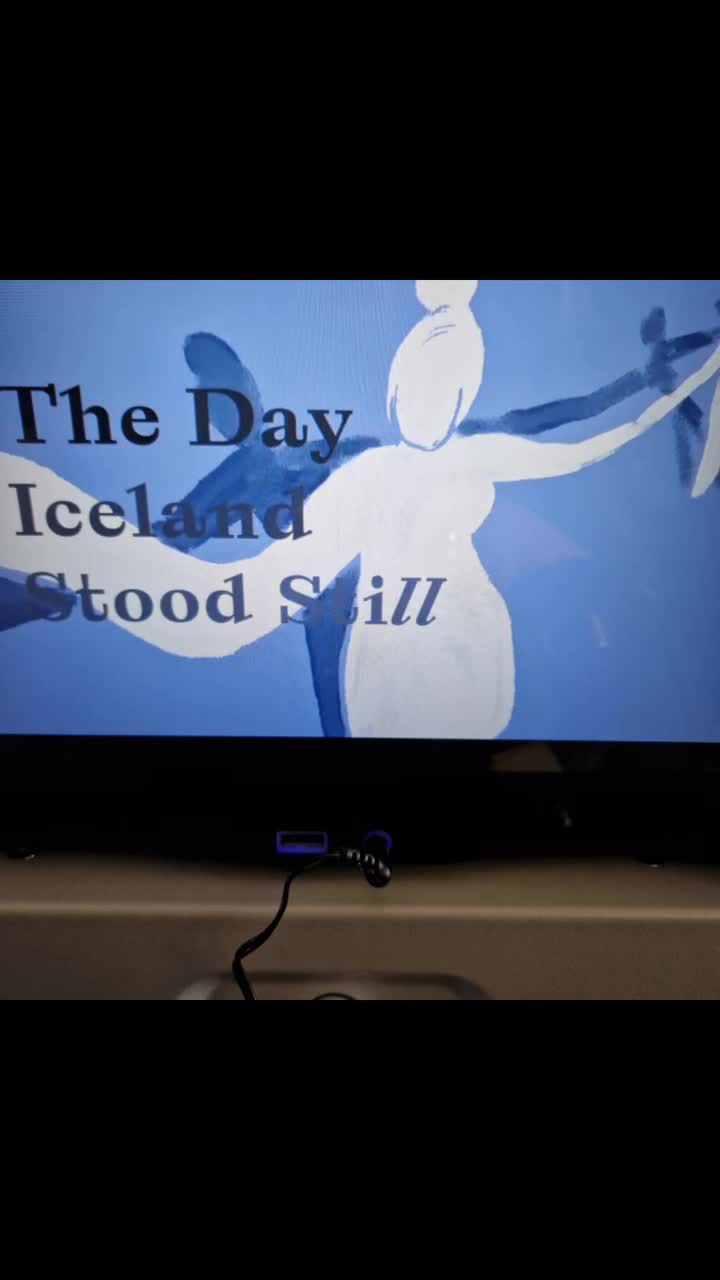
This was the date and year when Icelandic women took a day off—when they refused to work, at home and outside it—this was the day Iceland came to a standstill.
A HISTORICAL moment captured in a documentary, titled
The Day Iceland Stood Still (directed by Pamela Hogan).
A MUST-WATCH
The day Iceland Stood Still (2023) https://www.imdb.com/title/tt31937069/
THE LESSON LEARNED:
EQUALITY IS NOT GRANTED.
IT IS BUILT-DELIBERATELY,
COLLECTIVELY, AND
STRATEGICALLY
VISIBLE AND INVISIBLE WORK:
KUDOS to the millions of women shaping our world—
in boardrooms, institutions, communities, and homes:
YOUR WORK COUNTS
ALL OF IT
Including the work that is unpaid, unseen, and too often unrecognized.
OVER TO YOU
If women in Iceland can achieve equality, what can we learn from their journey? What can we do? How can we come together and push for REAL GENDER equality in our country?
DEMOCRACY IN NORDIC COUNTRIES
The democratic systems of Sweden, Norway, Denmark, Finland, and Iceland share a set of closely aligned principles shaped by constitutionalism, social trust, and egalitarian values.
1. Popular Sovereignty
Political authority rests with the people. Citizens elect representatives through free, fair, and regular elections based on universal suffrage.
2. Parliamentary Governance
All Nordic countries operate as parliamentary democracies, where governments are accountable to elected parliaments and can be dismissed by them.
3. Rule of Law
Public power is exercised under constitutional frameworks. Independent courts ensure that laws apply equally to all individuals, including political leaders.
4. Transparency and Openness
Public access to official documents and strong freedom of the press are central. Government decisions are expected to withstand public scrutiny.
5. Strong Local Self-Government
Municipalities and regions hold significant responsibility for welfare services, education, and healthcare, reinforcing citizen proximity to decision-making.
6. Consensus and Negotiation
Political culture emphasizes dialogue, coalition-building, and compromise rather than polarization. Minority governments are common and function through negotiated support.
7. Social Equality as Democratic Foundation
Democracy is closely linked to social welfare. Universal education, healthcare, and social protection are viewed as enabling meaningful political participation.
8. High Civic Trust and Participation
High levels of institutional trust, strong civil society organizations, and active voter participation contribute to democratic resilience.
In short, Nordic democracy combines formal political rights with social inclusion—linking representative governance to equality, transparency, and shared responsibility.
FEMALE PRIME MINISTERS IN NORDIC COUNTRIES
Prime Minister of DENMARK - Mette Frederiksen 2019 -

Prime Minister of FINLAND - Sanna Mirella Marin 2019-2023

Prime Minister of Iceland - Kristrún Frostadóttir - 2026 -
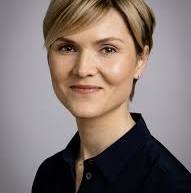
Prime Minister of NORWAY - Erna Solberg 2013-2021

Prime Minister of SWEDEN - Eva Magdalena Andersson 2021-2022

REFERENCE:
The Nordic Gender Effect at Work.
https://www.gu.se/sites/default/files/2020-05/The-nordic-gender-effect-at-work.pdf
ONE MORE THING,,,
Below are some pics from my trip to ICELAND in February 2026, and when I had an opportunity to meet with three of the original organizers and Leaders of the RED STOCKINGS.
A heartfelt thank you to Rakel for your generosity and for inviting me to coffee to meet these extraordinary former Red Stockings whose actions reshaped a nation. 🌹✌️✌️✌️